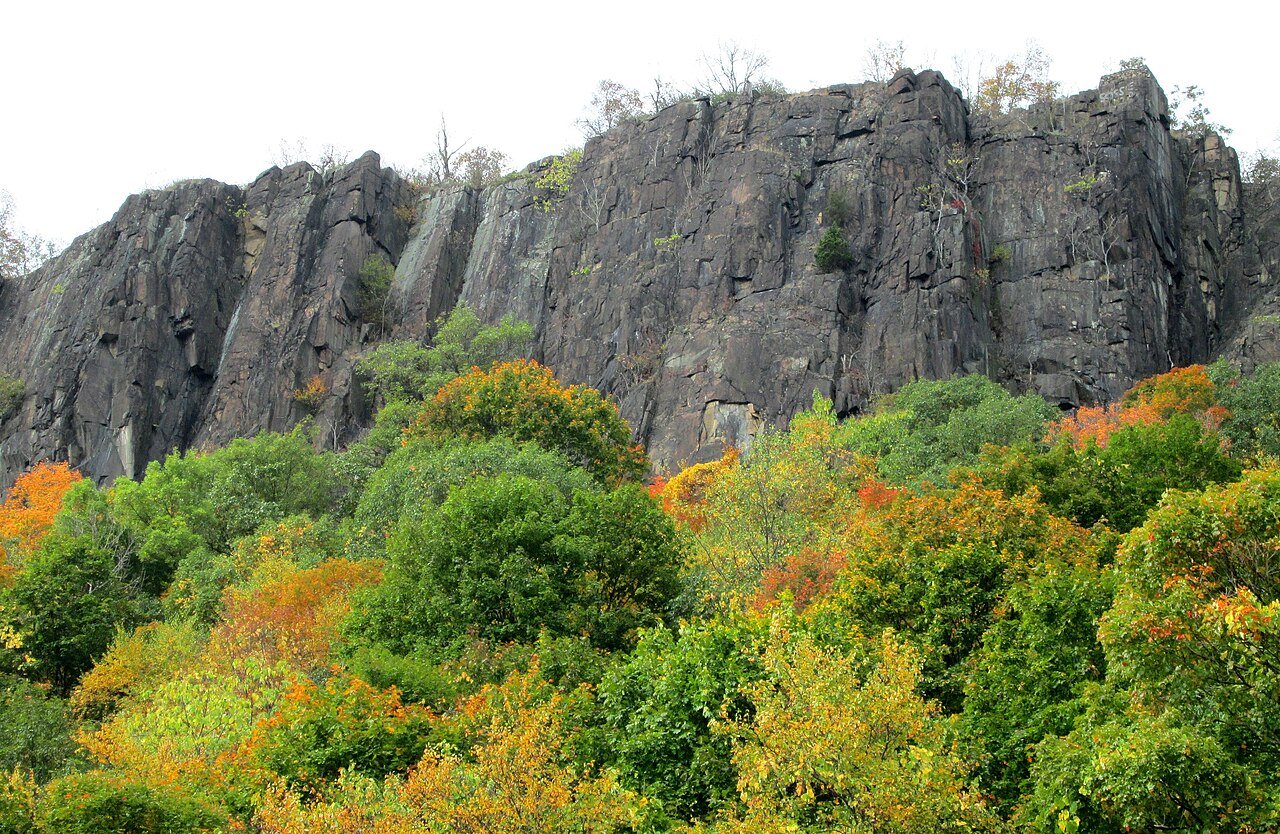
Stand at the edge of the Palisades on a quiet October morning and you'll hear the river, the wind, and maybe a hawk. You won't hear dynamite. A little over a hundred years ago, you would have.
The cliffs that line Bergen County's eastern edge look permanent. They were here before us and look as if they'll be here after. They very nearly weren't. For a stretch of the 1890s, workers blew apart the most famous view on the Hudson. They loaded it onto barges, one charge at a time.
Rock for a growing city
The trouble was that the Palisades are made of very good rock. New York was building docks, roads and foundations as fast as it could, and the dark traprock across the river was exactly what it needed.
At first the quarry men were polite about it. They gathered the boulders that had already tumbled to the foot of the cliffs. Then, in the 1890s, better dynamite came along, and they stopped waiting for the rock to fall.
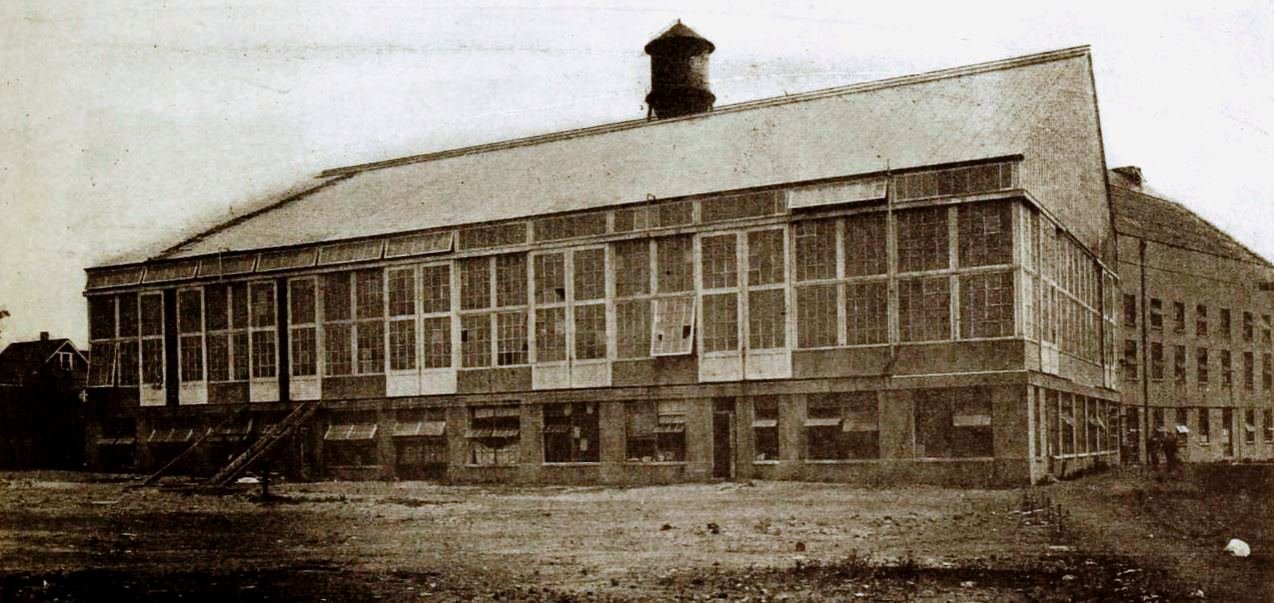
The biggest operation was the Carpenter Brothers quarry at Fort Lee. Blasts rattled houses on both banks of the river. Rock came through people's windows. On the New York side, rich families had built their mansions for the view. Now they watched it being carved up, and listened to it too.
The women who wouldn't let it go
The people who did the most to stop it couldn't vote. The New Jersey State Federation of Women's Clubs took up the cause in 1896. It formed a committee on forestry and the Palisades, chaired by Edith Gifford. She also ran a traveling library of forest books for any club that wanted one.
On September 22, 1897, Gifford and other club members boarded a yacht and sailed up to see the Carpenter Brothers blasting with their own eyes. They brought a newspaper reporter with them, which tells you they knew exactly what they were doing.
The Federation's president, Cecilia Gaines, summed up their strategy in one line: "As women, we are barred from legislating, but we can agitate." And they did. They lobbied Governor Foster Voorhees in Trenton, while a group of men in New York worked on Governor Theodore Roosevelt. In 1899, Voorhees put Gaines and fellow campaigner Elizabeth Vermilye on a five-person commission to study the problem.
Buying back a cliff
In 1900, New Jersey and New York each passed a law creating the Palisades Interstate Park Commission. Voorhees signed one bill and Roosevelt signed the other. Five members came from each state, and none of them were women. The two who had done so much of the work were left off, reportedly because the men would have felt uncomfortable.
The commission had a law but almost no land. The cliffs were split among about 175 separate landholdings. Its president, George W. Perkins, had a personal stake. His home in Riverdale looked straight across at the quarries. The blasting had been rattling his family for years.
The money that broke the logjam came from J.P. Morgan, who put up more than $125,000 to buy out the Carpenter Brothers. The biggest quarry on the Palisades shut down on Christmas Eve in 1900. Other quarries followed, and by the end of the decade most of the blasting had stopped.
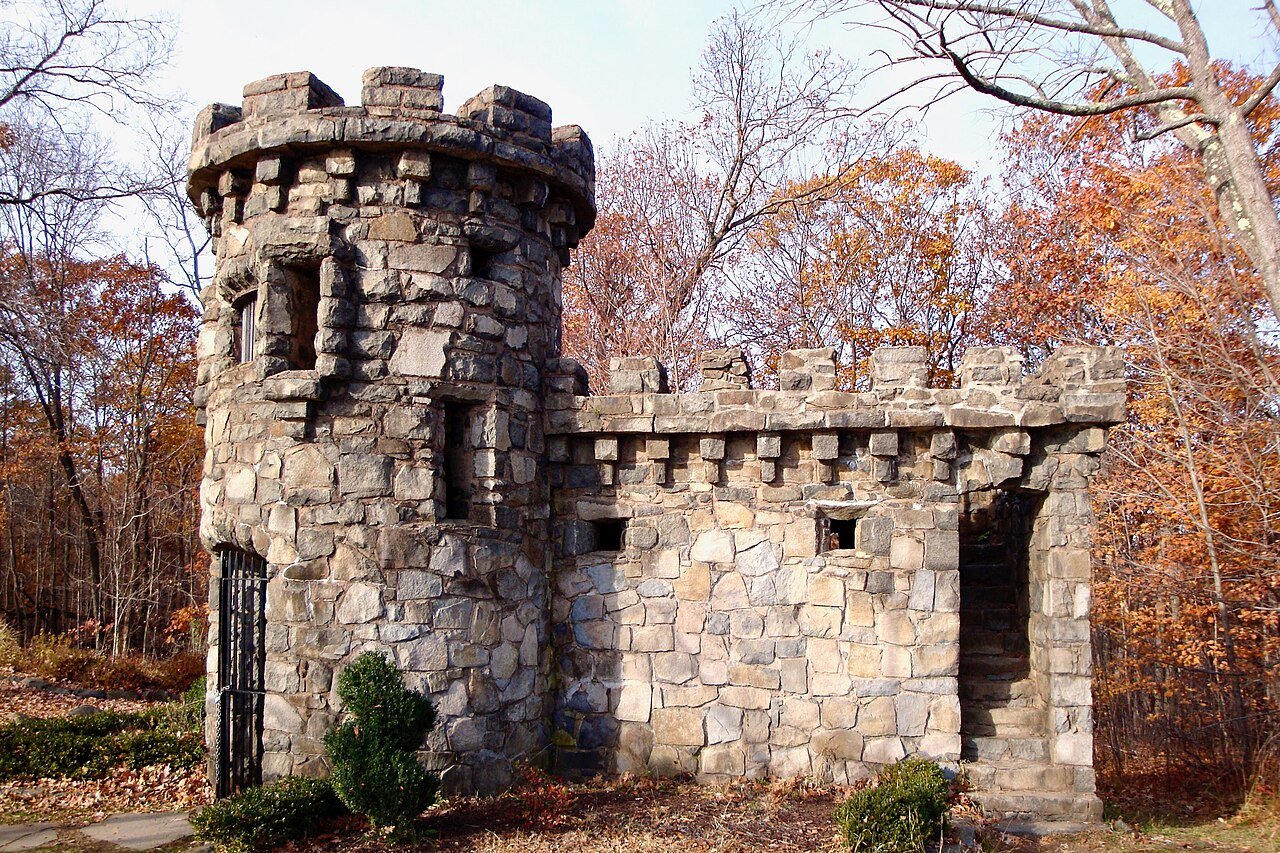
On September 27, 1909, the two governors dedicated the new park at the Kearney House at Alpine Landing. Twenty years later, in 1929, the women's clubs got a monument of their own: a small stone watchtower on the cliff top in Alpine. In 1933, John D. Rockefeller Jr. gave the commission about 700 acres along the top of the cliffs. He required a parkway and the removal of buildings from the skyline.
Go see it for yourself
The best way to understand what was almost lost is to walk it. Start at State Line Lookout, off the northbound Palisades Interstate Parkway about 2 miles north of Exit 2. Pick up the aqua-blazed Long Path heading south.
First you'll find the Women's Federation Monument, the little stone watchtower, half hidden in the trees. It's easy to walk past. Don't. Keep heading south to Ruckman Point. It's within a short walk of State Line Lookout and about 520 feet above the river. The whole width of the Hudson spreads out below you.
If you'd rather start at the bottom, drive down to Alpine Landing and see the Kearney House, where the park was dedicated in 1909. From the shore, look up at the cliffs and try to picture them with a quarry cut into them.
A practical note: parking at State Line Lookout is metered year-round. The first hour is no longer free. Check the park's current rules before you go.
Information checked October 2026.